




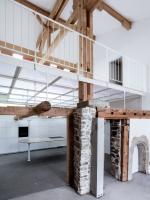
We approach architecture as a practice evolving within a field marked by both contrasts and multiplicities. We operate in environments where scales, materials, rhythms, and social realities coexist and collide, forming a whole that is anything but homogeneous.
In this context, we propose a critical architectural practice that aims not at providing answers but at formulating the right questions. We develop strategies to understand and react specifically to existing situations, revealing their potential: projects oscillate, seeking a balance between what is already there and what it could become.
Our approach is rooted in a practice of making. Working at a 1:1 scale allows ideas to be exchanged and understood through tangible experience: projects develop as narratives composed of observations, hypotheses, tests, failures, and discoveries. In this performative dimension of building, construction becomes a method of inquiry rather than an outcome. The act of making allows us to test assumptions, confront material realities, and narrow the gap between planning and execution. It offers a way to question, understand, and negotiate space in immediate terms.
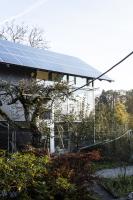
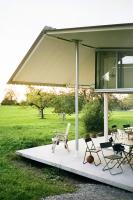
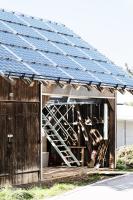
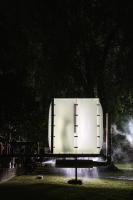
In this lecture we will present a series of projects—some already archived, some ongoing—as open questions rather than finished products. By attempting a personal reading of our projects, grouping them according to the problematics we are currently exploring, we will demonstrate how they form cycles, an open-ended list in which one research effort informs the next in a nonhierarchical logic, without preconceived order: fragments meet, producing unexpected narratives that guide the next project.
Randhir Sahni (M.Arch. ‘71) established the Llewelyn-Davies Sahni Innovative Practice series as an annual lecture that offers a model of innovative approaches to practice for our students, underscoring that agility is not only necessary for survival in architecture, but will permit them to practice in the most liberating and innovative ways.